
JS Tech Lab Facilities and Equipment
TGA
분류 Analysis
작성일 2026.01.15
조회 1529
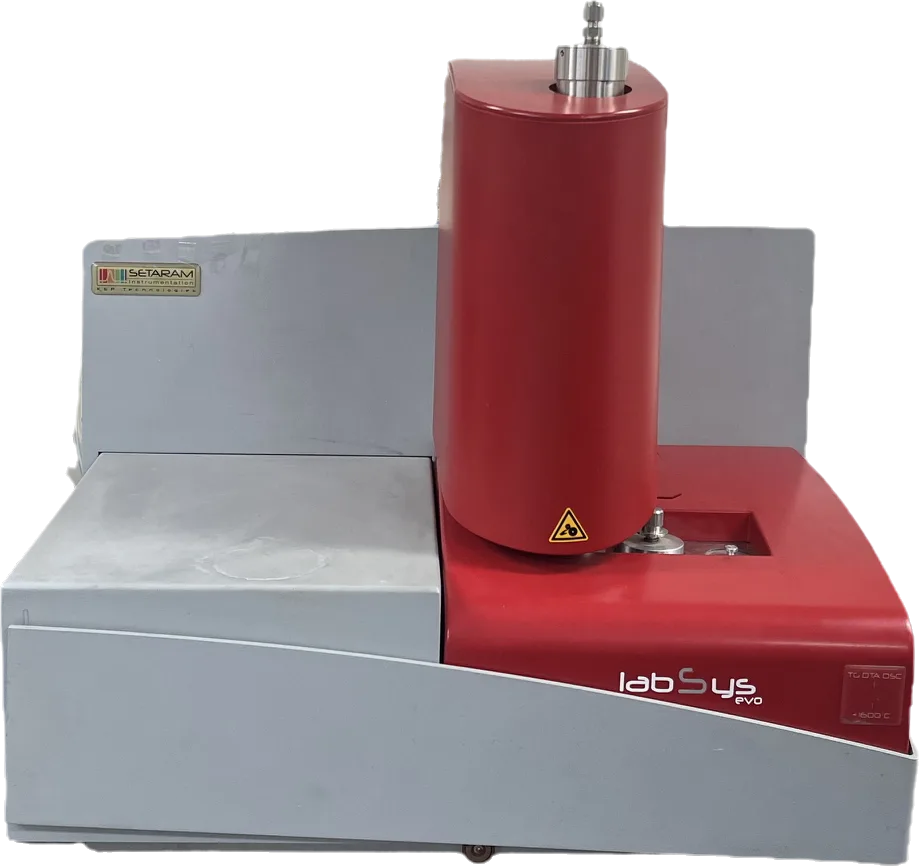
원리 및 기능
열중량 분석기(TGA)는 특정 분위기(불활성, 산화 또는 환원)에서 시료가 제어된 온도 프로그램에 노출되는 동안 온도 또는 시간의 함수로서 시료의 질량 변화를 측정한다.
기기는 가열로 내부에 장착된 정밀 열천칭으로 구성된다. 온도가 상승함에 따라 기기는 시료의 무게를 지속적으로 모니터링한다. TGA는 분해, 산화 또는 탈수로 인해 발생하는 중량 손실을 모니터링하여 열적 안정성 및 휘발성 성분의 비율을 결정하는 데 주로 사용된다.
활용
- 열적 안정성 및 분해: 재료가 분해되기 시작하거나 완전히 분해되는 온도를 파악하여 가공 및 사용 한계 평가에 활용
- 재료의 조성 분석: 고무·복합재 등의 혼합물을 분석하여 고분자, 충전재, 카본 블랙, 회분 함량의 비율을 결정
- 산화 및 부식 연구: 금속·세라믹이 고온에서 산소 또는 부식성 가스에 노출될 때 나타나는 질량 증가 거동을 관찰
- 저울 시스템 측정 범위: ±200 mg / ±1 g의 이중 모드
- 저울 분해능: 0.02 μg / 0.2 μg
- 무게 측정 범위: 1000 mg
- 온도 성능 범위: 상온 1,500℃.
- 가열 속도: 분당 0.01~100℃
- 정확도: 0.04℃의 고온 정확도 / ± 1℃의 등온 정확도
- 분위기 제어 진공: 10-1 mbar 미만
<TGA>
Principle and Functions
Thermogravimetric Analysis (TGA) measures the change in mass of a sample as a function of temperature or time while the sample is subjected to a controlled temperature program in a specific atmosphere (inert, oxidizing, or reducing).
The instrument consists of a precision thermobalance housed within a furnace. As the temperature increases, the instrument continuously monitors the sample's weight. TGA is primarily used to determine thermal stability and fraction of volatile components by monitoring the weight loss that occurs due to decomposition, oxidation, or dehydration.
Applications
- Thermal stability and decomposition: Determines the temperatures at which materials begin to decompose or fully degrade, useful for assessing processing and operational limits
• Material composition analysis: Analyzes mixed materials (e.g., rubber, composites) to quantify the percentage of polymers, fillers, carbon black, and ash content
• Oxidation and corrosion studies: Observes mass gain behavior when metals or ceramics are exposed to oxygen or corrosive gases at high temperatures
specifications
- Scale system measurement range: ±200 mg / ±1 g dual mode
- Scale resolution: 0.02 μg / 0.2 μg
- Weight measurement range: 1000 mg
- Temperature performance range: Room temperature to 1,500 °C
- Heating rate: 0.01–100 °C per minute
- Accuracy: High-temperature accuracy of 0.04 °C / Isothermal accuracy of ±1 °C
- Atmosphere control vacuum: Below 10-1 mbar