
JS Tech Lab Facilities and Equipment
BET
분류 Analysis
작성일 2026.01.16
조회 1197
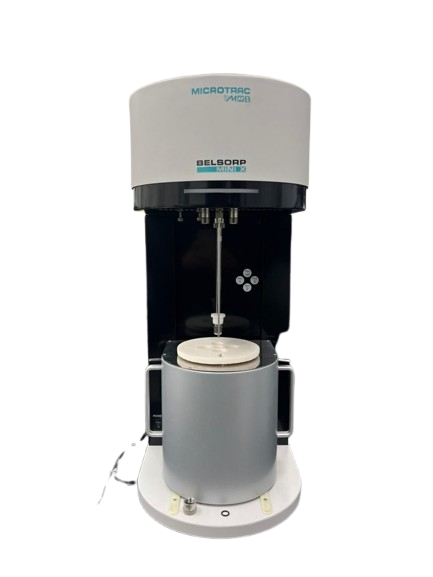
원리 및 기능 (Principle and Functions)
비표면적 및 기공 분석 장치는 물리흡착을 이용하여 분말·펠릿 등의 고체 시료에 대해 비표면적, 기공부피, 기공크기 분포, 기공 형태 등을 측정하는 장비이다. 미세공–중간공–거대공 영역에 걸친 기공 구조 분석이 가능하며, 약 0.7 nm부터 500 nm 범위까지의 기공 정보를 포함한 분석 결과를 제공한다.
기기활용 (Applications)
- 비표면적(BET) 측정
- 기공부피 측정
- 기공크기 분포도 분석(미세·중간·거대기공)
- 다공성 소재의 흡착/탈착 등온선 분석
- 소성·합성·분쇄·코팅 전후의 표면·기공 구조 변화 비교 분석
- 측정 가능 가스: N₂, Ar, CO₂, H₂, CH₄, n-butane, iso-butane 등 비부식성 가스
- BET 비표면적 측정 범위: ≥ 0.01 m²/g (시료 밀도에 따라 다름)
- 기공 크기 분석 범위: 약 0.7 nm ~ 500 nm (분자 탐침법 적용 시 약 0.35 nm까지)
- 시료 포트 수: 최대 4개 (동시 다중 시료 측정 가능)
- 측정 모드: 고속 분석을 위한 Quick BET 모드 지원
- 전처리: 50–450 °C 범위의 탈기 장치 옵션 제공
<BET>
Principle and Functions
A surface area and pore analysis instrument uses physisorption to measure the specific surface area, pore volume, pore size distribution, and pore morphology of solid materials (such as powders and pellets). It is capable of analyzing pore structures across the micro- to macropore range and provides reports covering pores from approximately 0.7 nm to 500 nm.
Specifications
- Measurable Gases: N₂, Ar, CO₂, H₂, CH₄, n-butane, iso-butane (non-corrosive gases)
• BET Surface Area Range: ≥ 0.01 m²/g (depending on sample density)
• Pore Size Analysis Range: ~0.7 nm to 500 nm (down to ~0.35 nm with molecular probe method)
• Number of Sample Ports: Up to 4 ports (simultaneous multi-sample measurement)
• Measurement Mode: Quick BET mode available for high-throughput analysis
• Software: BELCONTROL (operation & measurement control), BELMASTER™ (isotherm, BET, pore-size analysis)
• Sample Pretreatment: Optional built-in degassing unit (50–450 °C)
Applications
- BET specific surface area measurement
• Pore volume measurement
• Pore size distribution analysis (micro-, meso-, and macropores)
• Adsorption/desorption isotherm analysis of porous materials
• Comparative analysis of surface area and pore structure changes before and after processes such as calcination, synthesis, milling, or coating
• Characterization of inorganic porous materials (activated carbon, silica, zeolite, alumina, MOF, and other porous powder solids)